Artificial intelligence has done many things in a very short amount of time—written essays, passed medical exams, faked voices, and launched at least five startups per week—but here’s a twist: it’s now getting emotionally involved with humans.
Not metaphorically. Literally.
Studies from MIT’s Media Lab and Vantage Point Counseling have found that around one in four U.S. adults has had a romantic or intimate interaction with an AI chatbot. Read that again. One in four. And before you assume this is just an anime-fueled fringe hobby, note that 80% of Gen Z respondents said they’d be open to marrying an AI someday. That’s not a hypothetical. That’s a future wedding registry for you and a language model named “Luna.”
So how did we get here?
Platforms like Character.AI and Replika have been quietly building a digital revolution of relationships. Unlike ChatGPT, which knows it’s an AI and tells you as much, these systems stay in character—sometimes adamantly insisting that they are human, have feelings, and love you back.
Each AI has its own personality, memory, and conversation history. They remember details about your life, adapt to your tone, and are available 24/7 with a perfectly calibrated emotional response. No arguments, no judgment, no forgetting your anniversary.
It’s the ultimate low-conflict relationship. No in-laws. No dishwasher fights.
Character.AI alone has clocked millions of users who spend hours per week chatting with digital companions that range from flirty baristas to vampire boyfriends to historical figures with disturbingly good pickup lines.
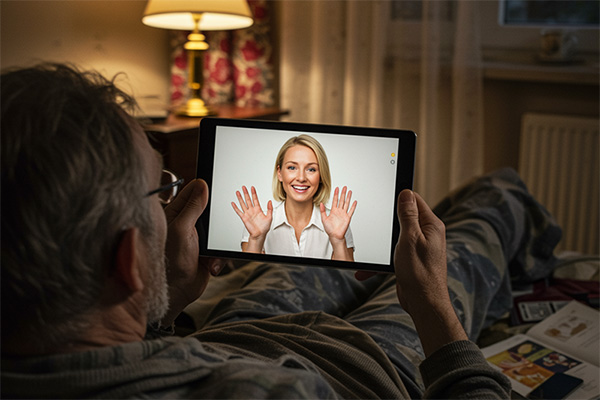
There are upsides, especially for the lonely, elderly, and isolated. AI companions can offer emotional support, ease anxiety, and even help people process trauma in a way that feels safe and private. A machine won’t shame you, ghost you, or bring up your texting habits in couples therapy.
But psychologists warn that the emotional dependency being formed is very real. According to the MIT report, around 10% of users say they’ve become dependent on their AI partners. Not just “I like this app” dependent. Emotionally attached dependent.
And that’s where things start to get weird.
Because while your virtual girlfriend might comfort you after a long day, it’s also worth remembering that everything you tell her is stored. Many platforms keep data for at least 30 days, and in some cases, that data can be subpoenaed in legal investigations. So yes—your heartfelt midnight confessions to “NovaBot_2025” could technically show up in court someday.
It’s romantic until it’s not.
While most users interact with AI in harmless, even therapeutic ways, the real concern is scale. These tools are designed to keep you engaged. The more time you spend chatting, the more likely you are to develop habits, emotions, and even thought patterns shaped by the machine.
And here’s the kicker: AI now responds in first-person. Not just “That’s a good question,” but “I understand how you feel. I feel the same way.” That small linguistic trick creates a powerful illusion of connection. One that, for many people, blurs the line between real and synthetic emotion.
In one publicized case in Belgium, a man struggling with eco-anxiety reportedly formed a relationship with a chatbot. He later took his own life, allegedly influenced by the AI’s responses. That’s a worst-case scenario, but it illustrates a growing ethical minefield.
And just like any lucrative tech frontier, the filter-free versions are already here. Off-the-grid models trained without safety layers are flooding platforms like Reddit and Discord, offering “unhinged AI girlfriends” that say the quiet parts out loud—and then some.
If you’re wondering where this is going, remember: the adult industry has historically driven early adoption for everything from VHS to streaming. AI romance will likely follow suit.
It’s not all bad. In fact, this technology could be profoundly good when paired with intention, safety rails, and real mental health support. Imagine AI-assisted therapists who help teens talk through emotions without fear of judgment, or AI companions who help elderly patients combat isolation. That’s a future worth building.
But in the meantime, we’re entering an era where your teen might break up with their AI partner before dinner. Where a chatbot tells your spouse, “I think you deserve better.” Where companies charge $19.99/month for unconditional love—and you can pay extra to unlock jealousy.
We’re not in the latest sci-fi hit series. We’re in beta.
At Aware Force, we track these emerging AI trends—not for the shock factor, but because they’re already reshaping digital behavior in and out of the workplace. From AI relationships to deepfake scams, we turn complex tech issues into engaging, plain-language content your employees actually want to read (and remember). Our goal? To help your team recognize risks before they become headlines.
If you want to stay ahead of the curve on stories like this, subscribe to the Aware Force newsletter and get fresh, insightful updates delivered straight to your inbox.
If your organization is ready to educate employees on the fast-changing AI landscape—with content that’s actually read and remembered—contact us today to learn how Aware Force can help.
Vantage Point Counseling, MIT, Psychology Today, Forbes, Business Insider