Recognize AI Voice Cloning Scams and Protect Yourself from Vishing
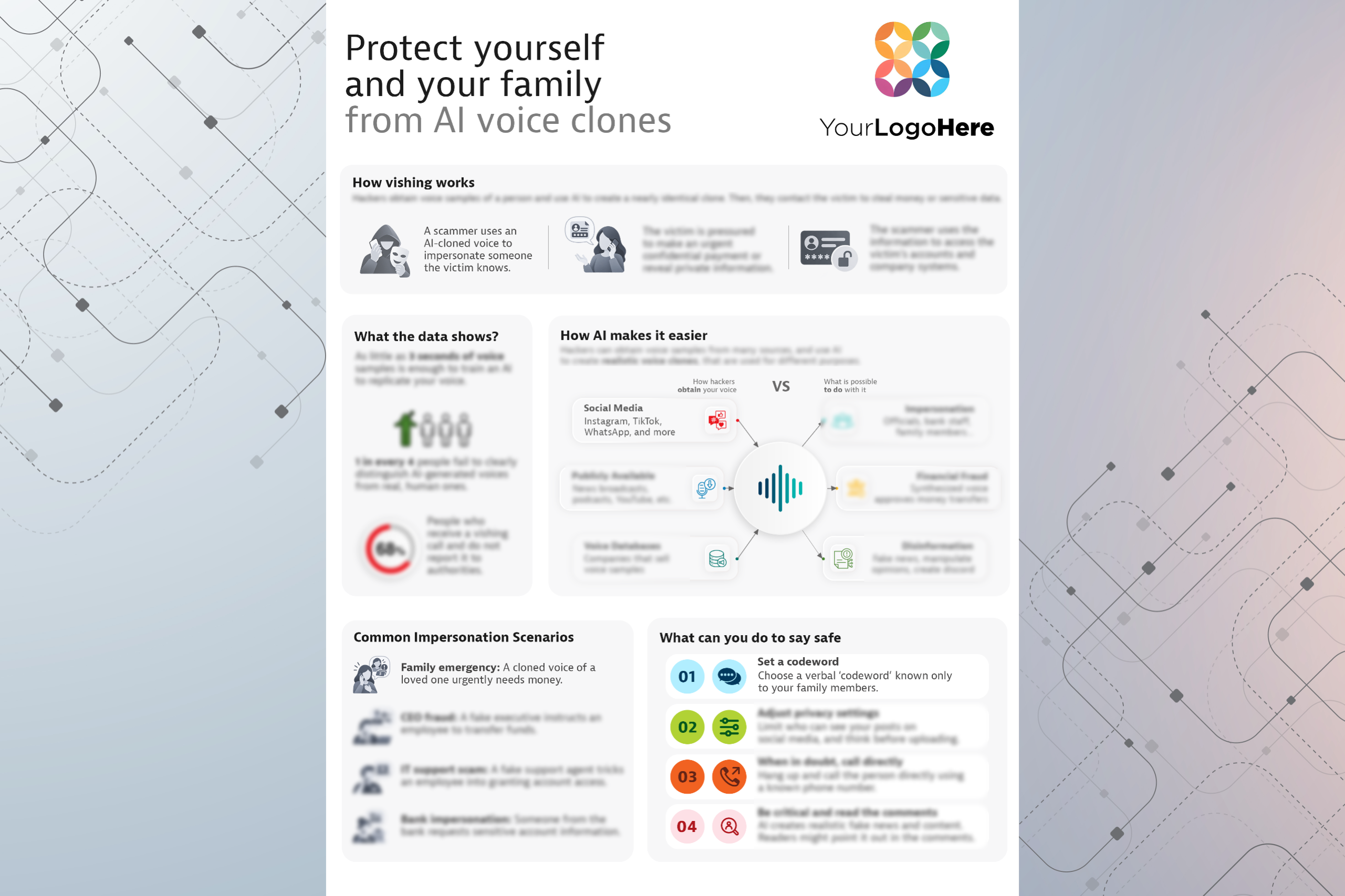
What if a phone call sounded exactly like your boss, a family member, or someone you trust—but wasn’t really them? With AI voice cloning technology, cybercriminals can create convincing impersonations that make fraudulent requests sound alarmingly real.
Block Voice-Phishing Attacks is a 1-page digital or printable reference guide that helps employees and families understand
vishing (voice phishing) and recognize the warning signs before becoming victims.
This visually engaging guide explains how scammers obtain voice samples, use artificial intelligence to imitate familiar voices, and pressure victims into sharing sensitive information or making urgent payments. It highlights common impersonation scenarios, including family emergencies and executive fraud, while presenting eye-opening statistics that demonstrate why voice-based scams deserve greater attention.
Most importantly, the resource gives readers
four practical strategies for protecting themselves against AI-powered voice scams. Simple actions, such as establishing a family codeword, questioning unexpected requests, and hanging up to call someone back using a trusted number, can help users verify identities before sharing information or sending money.
Designed for beginner to intermediate audiences, this easy-to-understand guide makes an unfamiliar cybersecurity threat approachable without overwhelming readers with technical details. It’s particularly valuable for organizations looking to strengthen
phishing awareness, workplace security, and personal cybersafety, while helping employees protect themselves and their loved ones at home.
Send us your logo and we can custom-brand this resource for your organization, making it a valuable addition to your cybersecurity awareness and employee education programs.
Ideas for How to Use This Resource
- Feature in phishing, vishing, or AI-powered scam awareness campaigns
- Share with Finance, HR, and executive support teams that handle sensitive requests
- Include in employee onboarding and cybersecurity refresher training
- Distribute through your LMS, intranet, or employee newsletter
- Share with employees and their families, particularly older adults, to encourage safer phone habits
- Pair with AI awareness, business email compromise, and identity theft resources for a broader scam prevention campaign