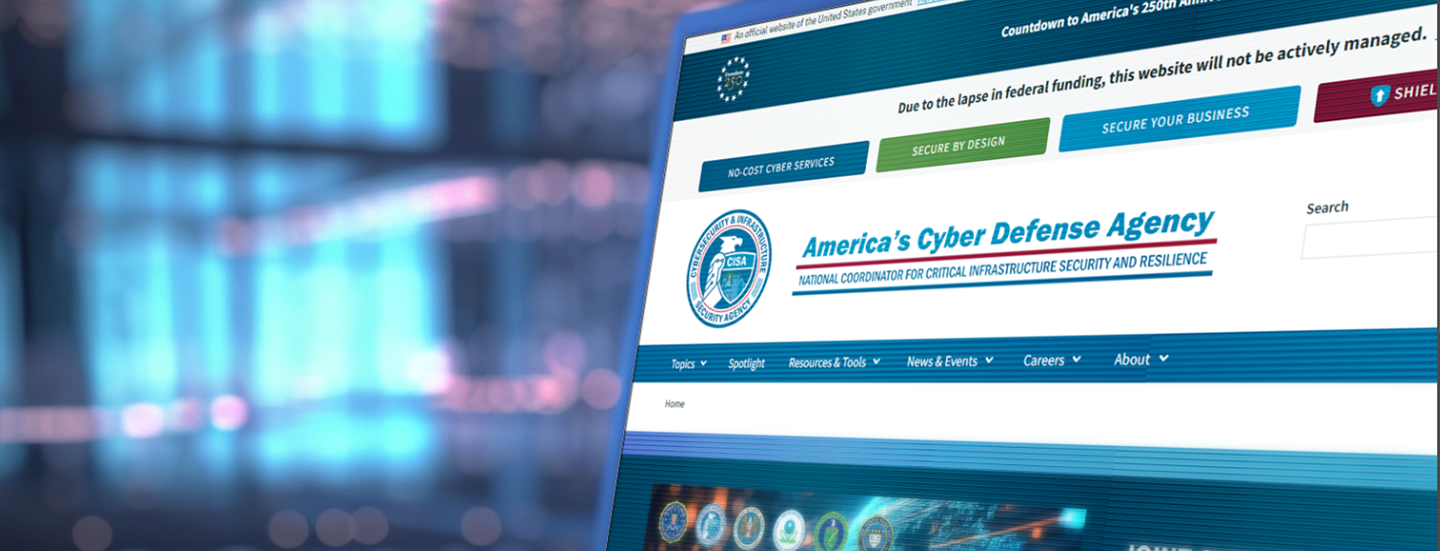
Analysis: CISA’s Massive Budget Cut is About to Hit Cybersecurity Teams
blog
In a coordinated rollback move, the White House has proposed cutting approximately $707 million from CISA’s budget, reducing it from around $2.9 billion to $2.2 billion—a move that follows an earlier push to cut $491 million in FY2026 (AFCEA, Cybersecurity Dive).
The proposal targets election security, workforce development, and stakeholder engagement programs—the very functions that connect federal cybersecurity capabilities to the rest of the country. At the same time, the Office of Management and Budget has framed the cuts as a way to “refocus CISA on its core mission” of federal network defense, while eliminating what it calls “waste” tied to misinformation tracking.
CISA is expected to lose about 1,100 personnel, shrinking its workforce to roughly 2,600.
The direction here is clear:
Less coordination. Less support. More fragmentation.
4 Silent Ways Most Organizations Rely on CISA
For years, CISA has operated as the connective tissue of U.S. cybersecurity—a role often overlooked because it works best when it’s invisible.
CISA is the entity that:
- Shares government-grade threat intelligence with private infrastructure
- Coordinates response during large-scale incidents
- Provides free services like vulnerability scanning and cyber hygiene
- Acts as a neutral, defense-focused clearinghouse for sensitive information
Multiple reports warn that cuts to “stakeholder engagement” and external support programs will weaken this layer.
That matters because many organizations have built their security posture around the assumption that this connective layer will always be there.
Now, it won’t be…at least not in the same way.
5 Direct Impacts On Private Sector’s CISOs
1. Erosion of Trust
CISA is regarded as a trusted third party—distinct from law enforcement or intelligence agencies.
If stakeholder engagement channels erode, that trust layer erodes resulting in:
- Less willingness to share “near-miss” incidents
- Reduced visibility into emerging threats
- A more fragmented national threat picture
2. The Disappearance of “Free” Security Will Affect Budgets
Programs like Cyber Hygiene Services have allowed organizations to access at no cost:
- Vulnerability scanning
- Risk reports
- Baseline security insights
Now, CISOs who use this service are forced into the commercial market, looking at vendors to replace what was once federally supported.
3. Intelligence Gaps Will Hit the Weakest First—But Not Only Them
CISA has bridged classified intelligence and critical infrastructure—especially in sectors such as energy, water, and regional utilities.
Blowing that bridge slows the flow of information and breaks access for those who can’t replace it.
Smaller organizations and local operators—which are already resource-constrained—may lose their direct line to federal threat intelligence entirely.
And while enterprises may compensate with paid feeds and private intelligence, they remain exposed through their supply chains.
4. Supply Chain Risk Is About to Get More Expensive—and Dangerous
CISA has been a driving force behind initiatives like:
- SBOM (Software Bill of Materials)
- Secure by Design principles
These efforts push vendors toward greater transparency and accountability.
A weakened CISA means weakened pressure:
- Slower adoption of secure development standards
- Less transparency from software vendors
- Increased burden on enterprise procurement teams
CISOs will now need to validate what was previously standardized manually.
That’s not just inefficient. It’s unsustainable at scale.
5. Incident Response Without a Conductor
When major vulnerabilities hit (think Log4j), CISA’s Joint Cyber Defense Collaborative (JCDC) acts as a central coordinator, aligning ISPs, cloud providers, and security firms.
Remove or weaken that coordination, and you get:
- Conflicting intelligence streams
- Delayed validation of threats
- Increased reliance on “pay-to-play” intel feeds
More noise. Less clarity. Slower response.
And in a live incident, delay equals damage.
The MSSP Domino Effect
Analysts already point out that Managed Security Service Providers (MSSPs) will face:
- Increased demand
- Rising operational pressure
- Higher service costs
This creates a market where cybersecurity becomes more expensive, less accessible, and less evenly distributed, ultimately increasing systemic risk across the board.
Compliance Confusion Is Coming Next
CISA has also played a crucial role as an interpreter of federal cybersecurity mandates, including incident-reporting frameworks.
With fewer staff and a reduced scope, that guidance layer weakens.
CISOs are left navigating:
- Complex compliance requirements
- Increased risk of underreporting—or overreporting
- Greater legal and operational uncertainty
Which wastes time, money, and focus.
Tldr: What This Means for the Boardroom
Strip away the policy language, and the message to cybersecurity leaders is clear:
The federal safety net is shrinking.
That forces a strategic pivot toward self-reliance:
- Increased investment in private threat intelligence
- Stronger internal supply chain risk management
- Direct participation in peer-based sharing networks (ISACs)
- Greater emphasis on internal detection, response, and resilience
This isn’t optional. It’s already happening.
And Here’s the Overlooked Risk: Your People
As systems become more complex and support becomes fragmented, one risk grows faster than all the others:
Human risk.
When coordination breaks down externally, alignment must strengthen internally.
Employees need to understand:
- Why threats are increasing
- Why expectations are changing
- What their role is in preventing incidents
Without that, even the best-funded security strategy will fail under pressure. The gap becomes:
Translation.
Organizations need to turn complex, shifting cybersecurity realities into clear, engaging communication that drives behavior change.
Because in a fragmented landscape:
- Awareness needs to be aggressive; it can’t be passive
- Messaging can’t be vague
- Employees can’t be disengaged
When CISA does less, your people have to do more.
Are they ready?
—
Sources: Security Magazine, SiliconANGLE, MeriTalk, Nextgov, CybersecurityDive, Aware Force
Get the latest insights in cybersecurity. Subscribe to the Aware Force Cyber Blog
Insightful cyber news, fresh ideas for engaging your employees and more.
Search

Richard Warner is a recognized expert on human cyber risk and the founder/CEO of Aware Force, where he and his team create cybersecurity content tailored to each client’s culture that is engaging, relatable, and effective.
Leveraging his decades of experience as a prominent journalist and communicator with outlets including FOX and the GPB Television Network, Richard helps organizations worldwide transform human weak links into their strongest digital defense.
He is based in Atlanta and pioneers effective strategies for security culture and employee engagement.